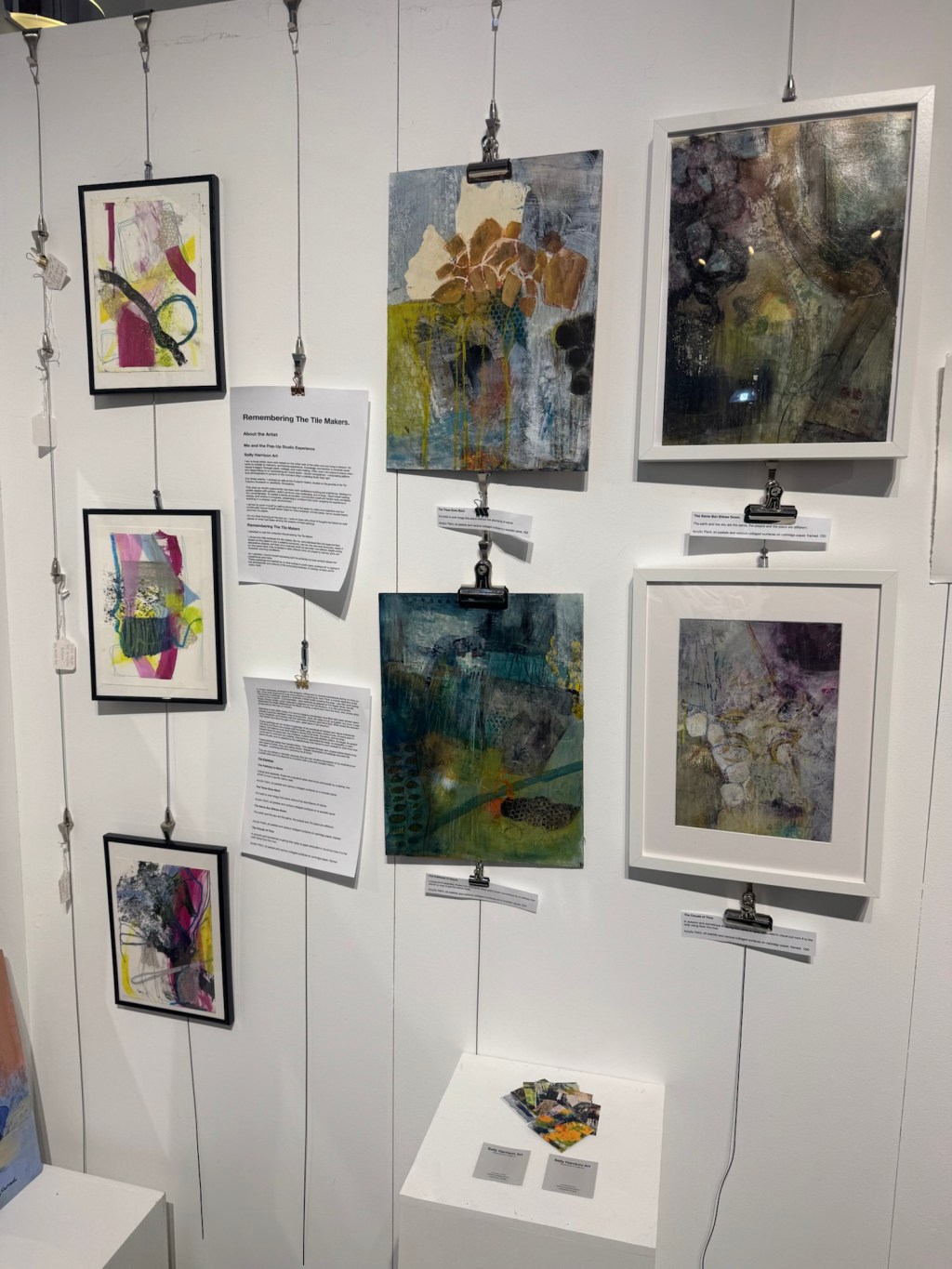
Over the next couple of weeks, 23rd February 2025 to 9th March 2025, there will be an ad-hoc exhibition of work from the artists, including myself who have been using the pop-up studios in February.
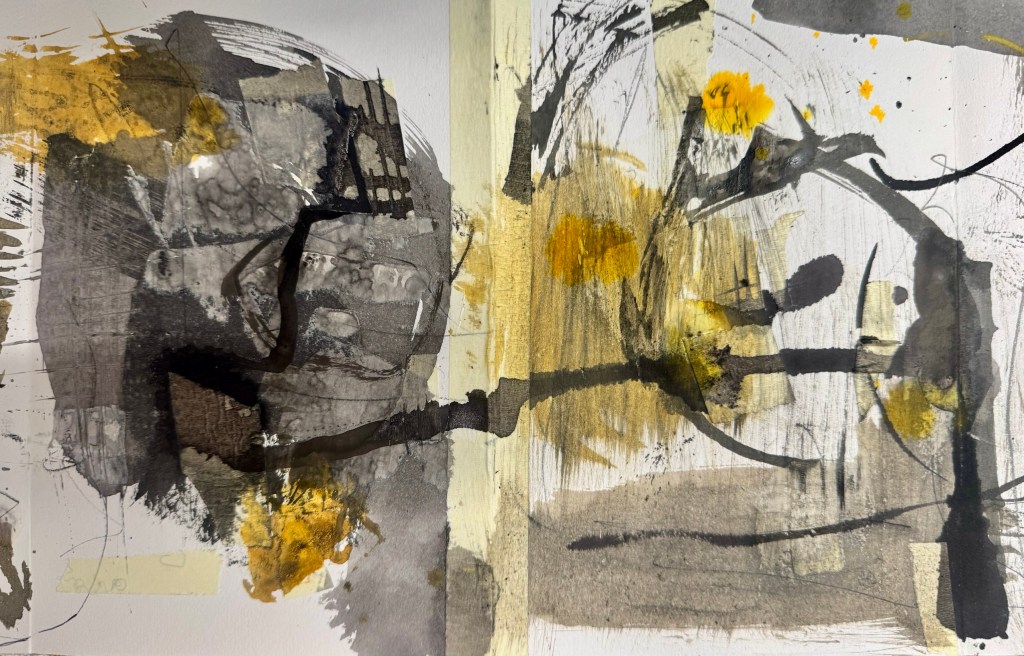
Yesterday the 22nd I had been encouraged to participate and display three older pieces that I had bought to decorate my studio space. It felt scary and a bit exciting, and I was simply grateful to be included.
Today the 23rd, I confidently hung another four pieces, completed on site during my three weeks in my pop-up studio after all the inspiration, encouragement, syncronicity, creative conversation and general good feelings all fused together and I suddenly had a vision of why I had made those four images and what they meant to me.
Boom! There I was at 6 in the morning tapping away trying to get down as many of the thoughts as I could before the flow of enlightenment stopped.
Covering two sheets of A4 I have an artist’s statement and a description for the four-piece collection. This is presented below with additional photographs.
About the Artist
Me and the Pop-Up Studio Experience
Sally Harrison Art
I am a local artist, born and raised on the other side of the valley and now living in Newport. My work is rooted in memory, combining experience, knowledge, and emotion to intuitively create visual imagery through paint, collage, and mark-making. Often, even I am unsure of exactly what I am responding to or expressing as I build layers—almost compulsively—manipulating patterns and atmosphere in pursuit of the moment when a painting finally feels ‘right.’
For three weeks, I worked on-site at the Footprint Gallery, located on the grounds of the Tile Factory Museum in Jackfield, Shropshire.
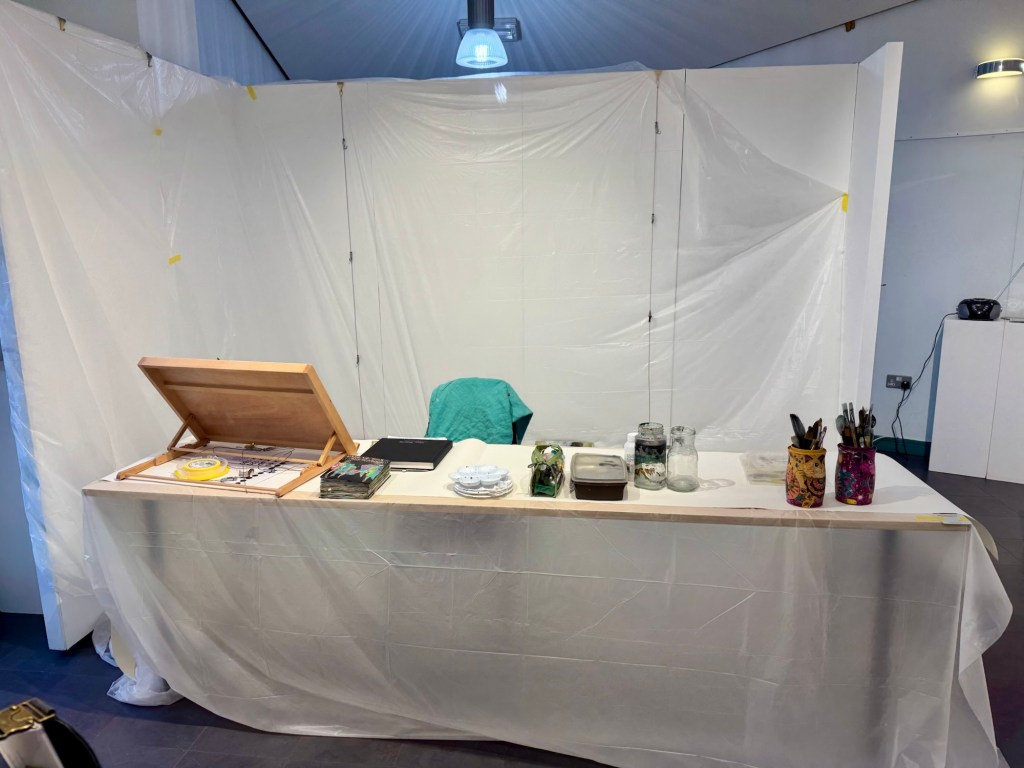
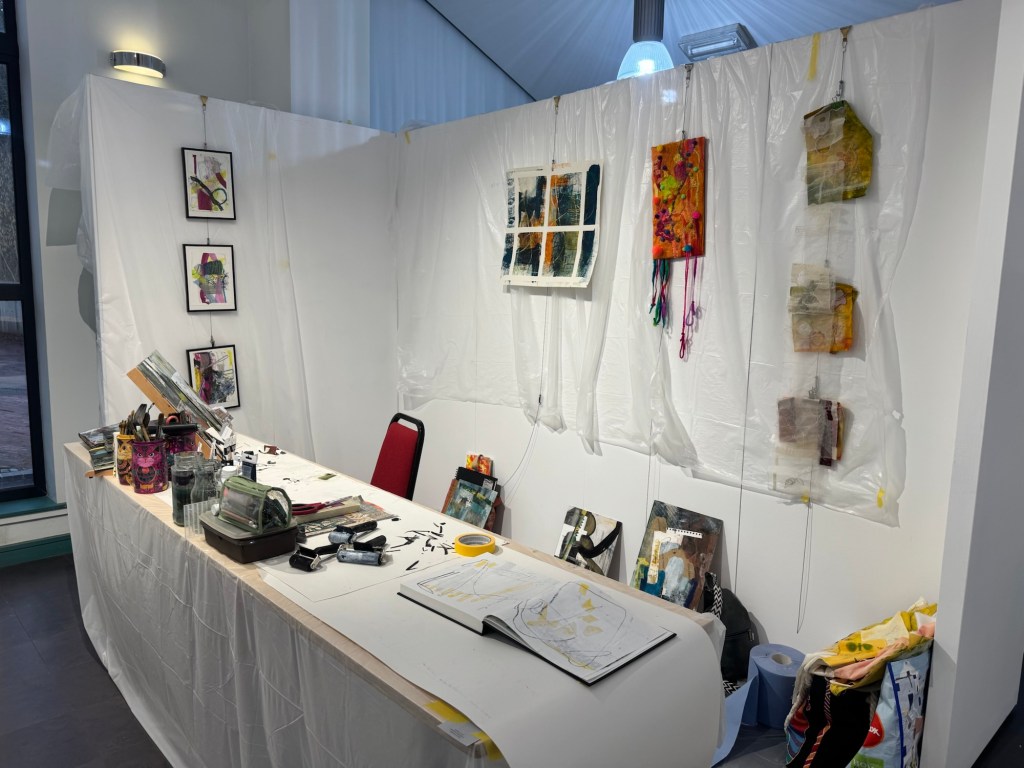
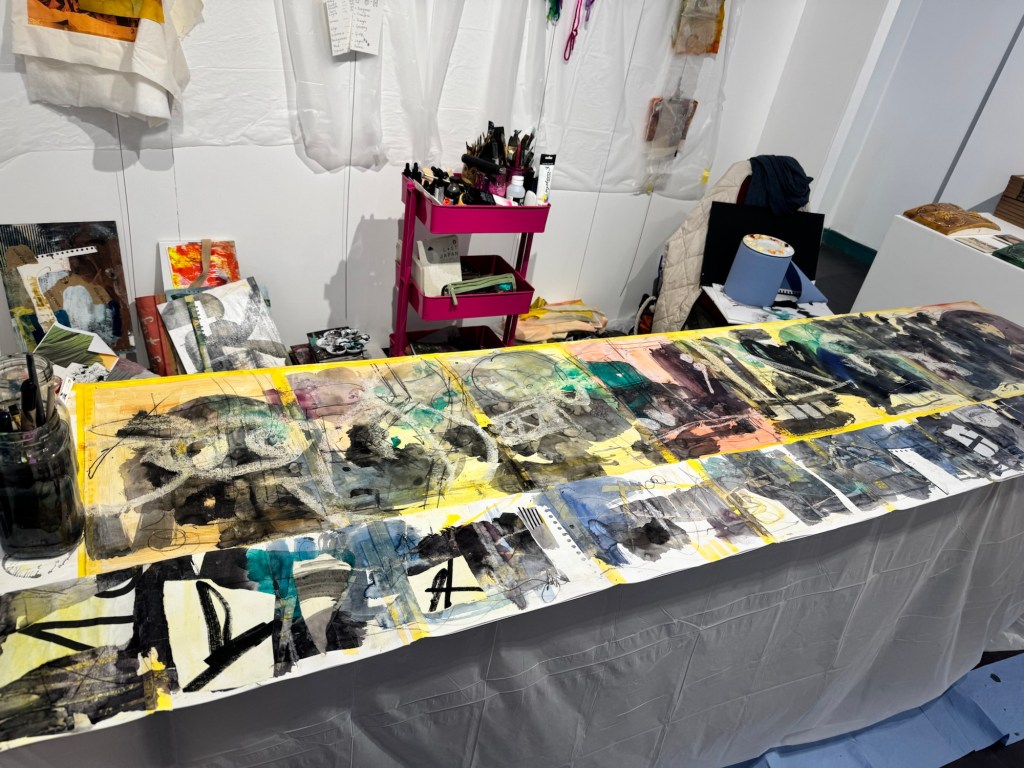
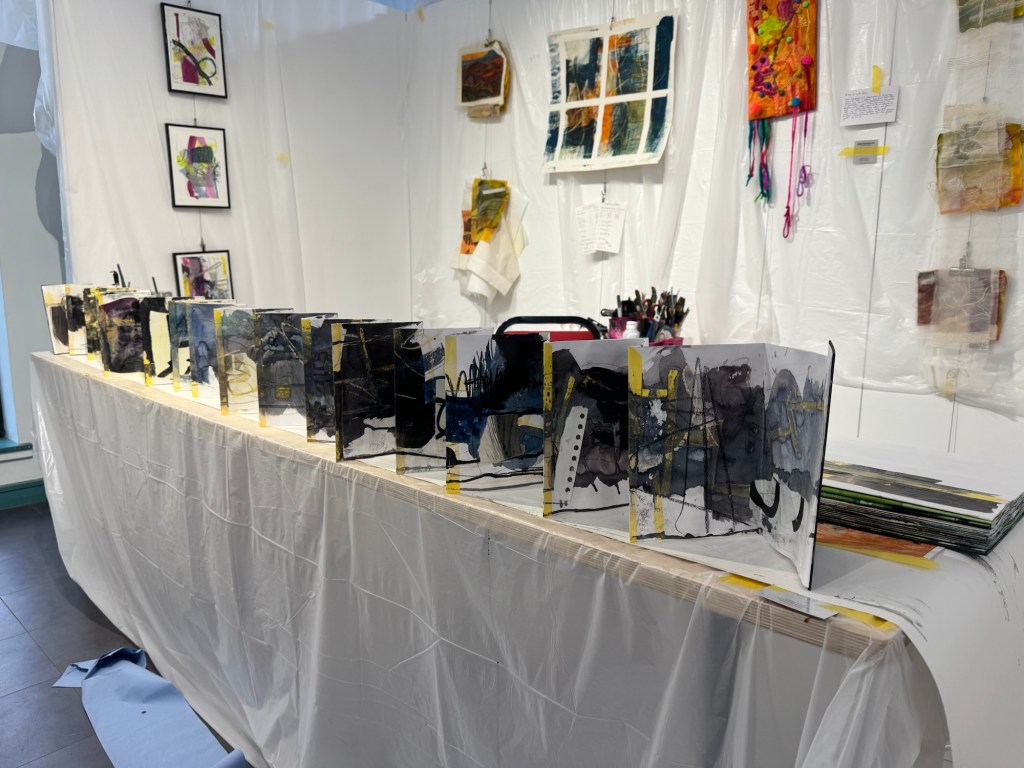
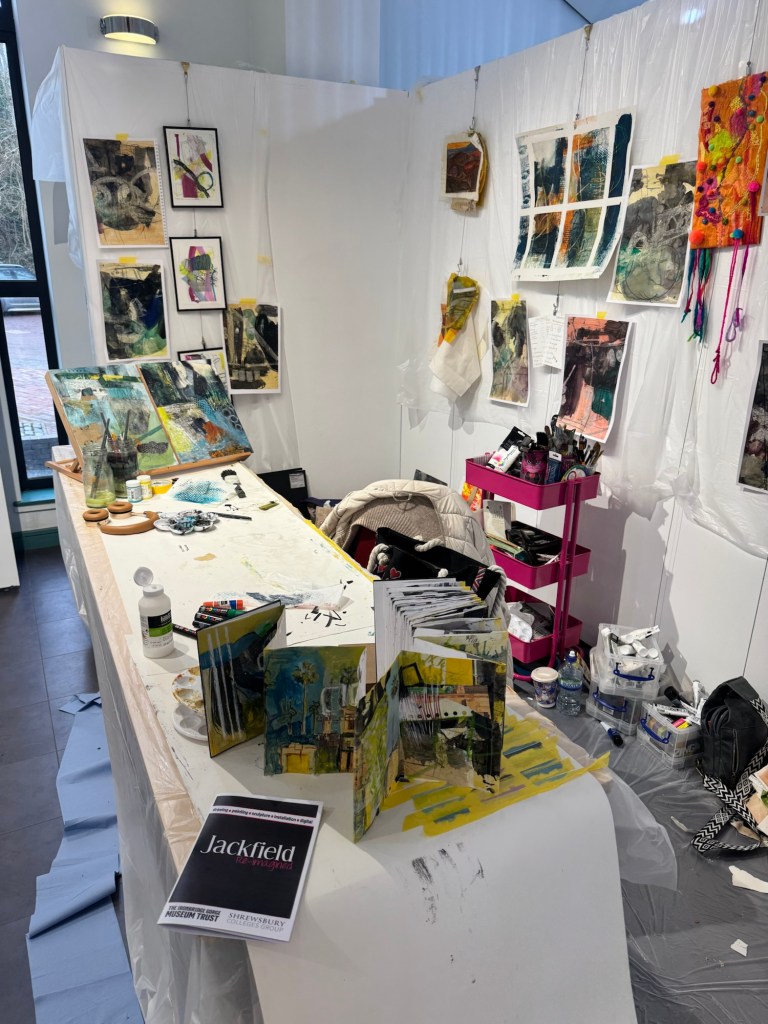
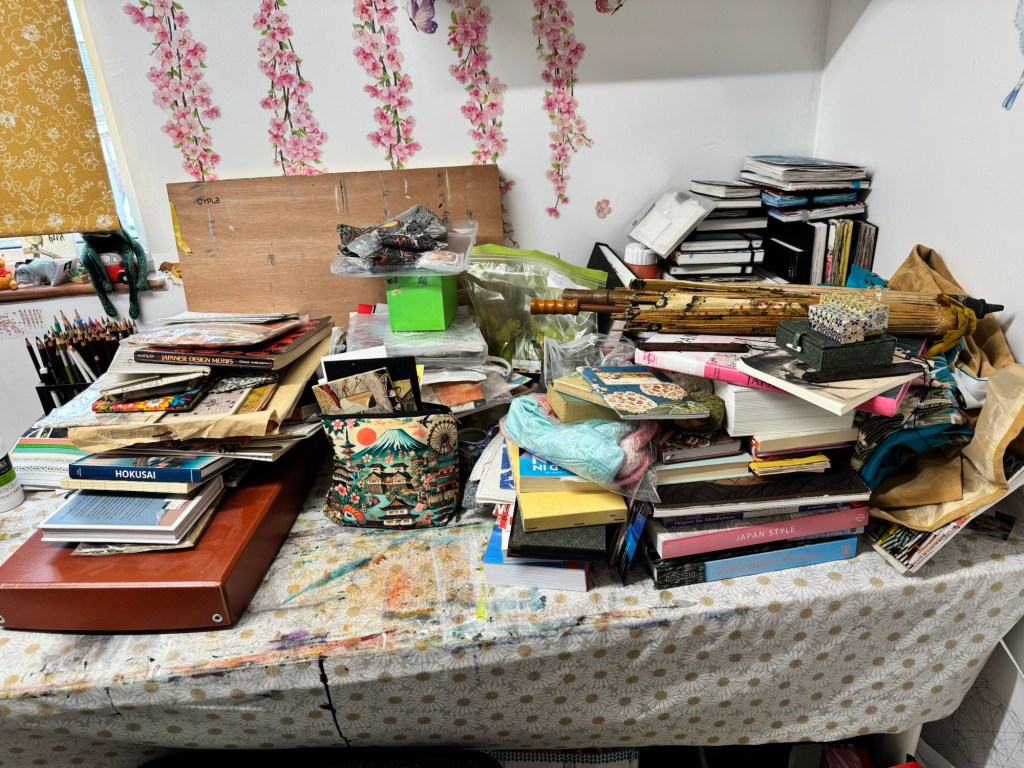
This pop-up studio opportunity has been both confidence-building and enlightening. Working in a public space with artists I didn’t yet know was challenging, and at times, I found myself masking my uncertainties. To create a sense of comfort, I surrounded myself with familiar tools, completed works, and works in progress—presenting a confident front while navigating the experience of working in a shared, open environment.
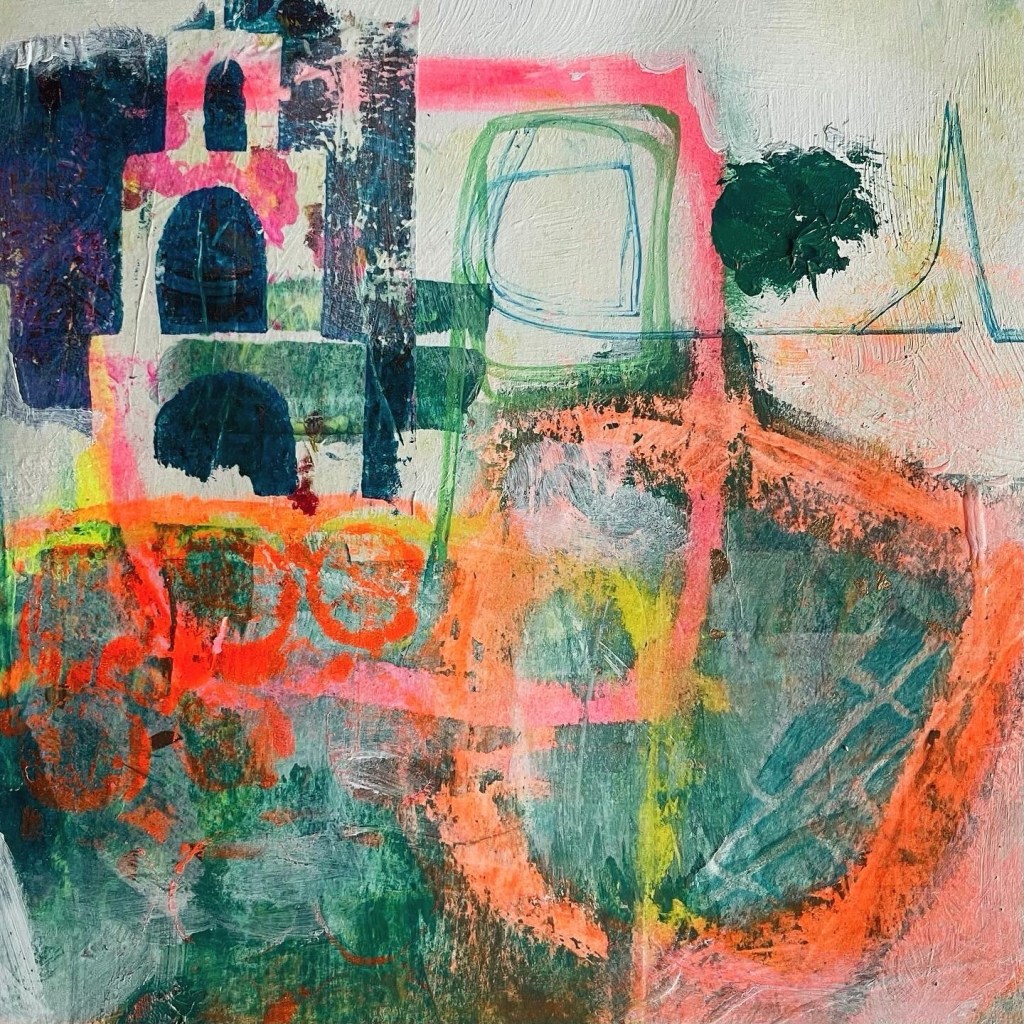
I aimed to push myself by taking advantage of the space to create more expansive work but continually found myself drawn back to more contained, intimate pieces—two on wooden boards and two on paper.
On my final morning at the pop-up, I woke at dawn with a flood of thoughts that helped me make sense of what had been driving the creation of these paintings.
Remembering The Tile Makers
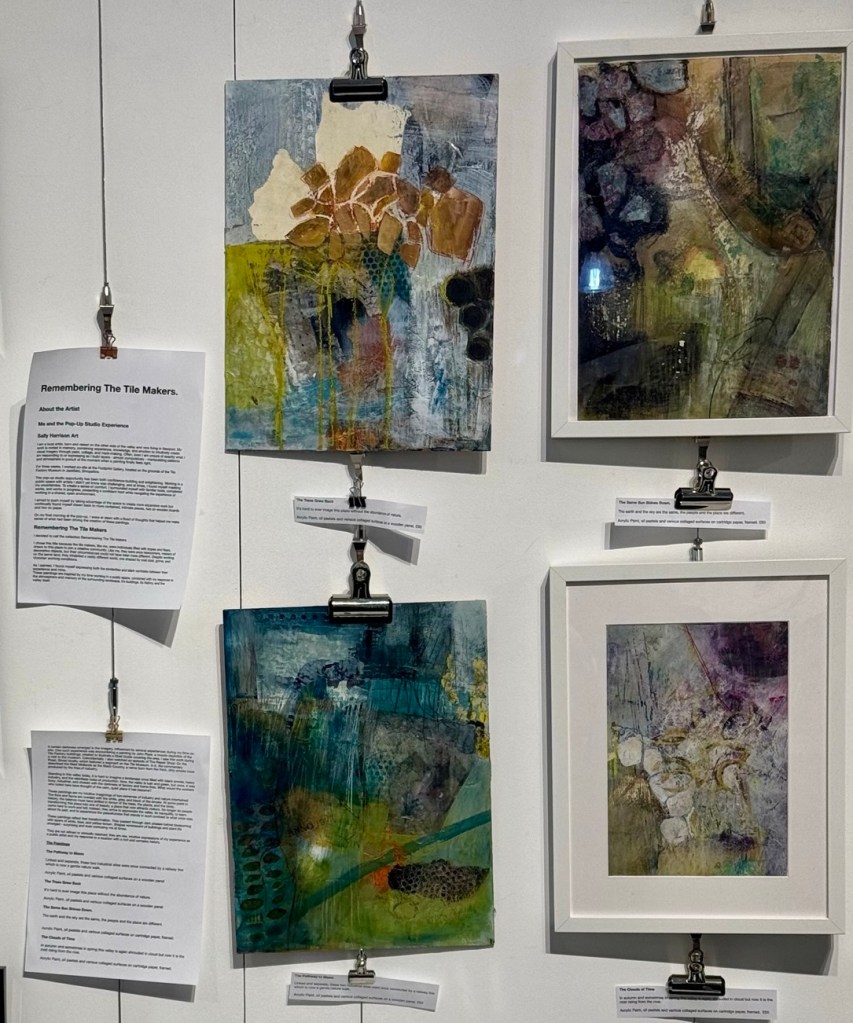
I decided to call the collection Remembering The Tile Makers.
I chose this title because the tile makers, like me, were individuals filled with hopes and fears, drawn to this place to join a creative community. Like me, they were once newcomers, makers of decorative objects—but their circumstances could not have been more different. Despite working on the same land, they inhabited a vastly different world, one shaped by coal dust, grime, and Victorian working conditions. As I painted, I found myself expressing both the similarities and stark contrasts between their experience and mine.
These paintings are inspired by my time working in a public space, combined with my response to the atmosphere and memory of the surrounding landscape—its buildings, its history, and the valley itself.
A certain darkness emerged in the imagery, influenced by several experiences during my time on-site. One such experience was encountering a painting by John Piper—a moody depiction of the Tile Factory buildings, created to illustrate a Shell Guide covering the area. I saw this work during a visit to the museum. Coincidentally, I also watched an episode of The Repair Shop: On the Road, filmed locally, which featured a segment on the Tile Museum. In it, the commentary described the West Midlands as the “Black Country,” a name born from the thick, dirty smoke once produced by the fires of industry.
Standing in this valley today, it is hard to imagine a landscape once filled with black smoke, heavy industry, and the relentless noise of production. Now, the valley is lush and green, but once, it was busy, industrial, and choked with the darkness of factory and home fires. What would the workers who toiled here have thought of the calm, quiet place it has become?
These paintings are my intuitive imaginings of two extremes—industry and nature intertwined. The flora and fauna are overlaid with the white, grey, and black of the smoke. At some point in history, the balance must have shifted in favor of the trees, the plants, and the birds, transforming this place into one of beauty, a place that now attracts visitors. No longer do people come here to work and toil; instead, they arrive to appreciate the valley’s tranquility, to learn about its past, and to experience the peacefulness that stands in such contrast to what once was.
These paintings reflect that transformation. They passed through dark phases before blossoming with layers of white, blue, and yellow-brown. Shapes reminiscent of buildings and plant life emerged—surprising and even confusing me at times.
They are not refined or clinically resolved; they are raw, intuitive expressions of my experience as a public artist and my response to a location with a rich and complex history.
The Paintings
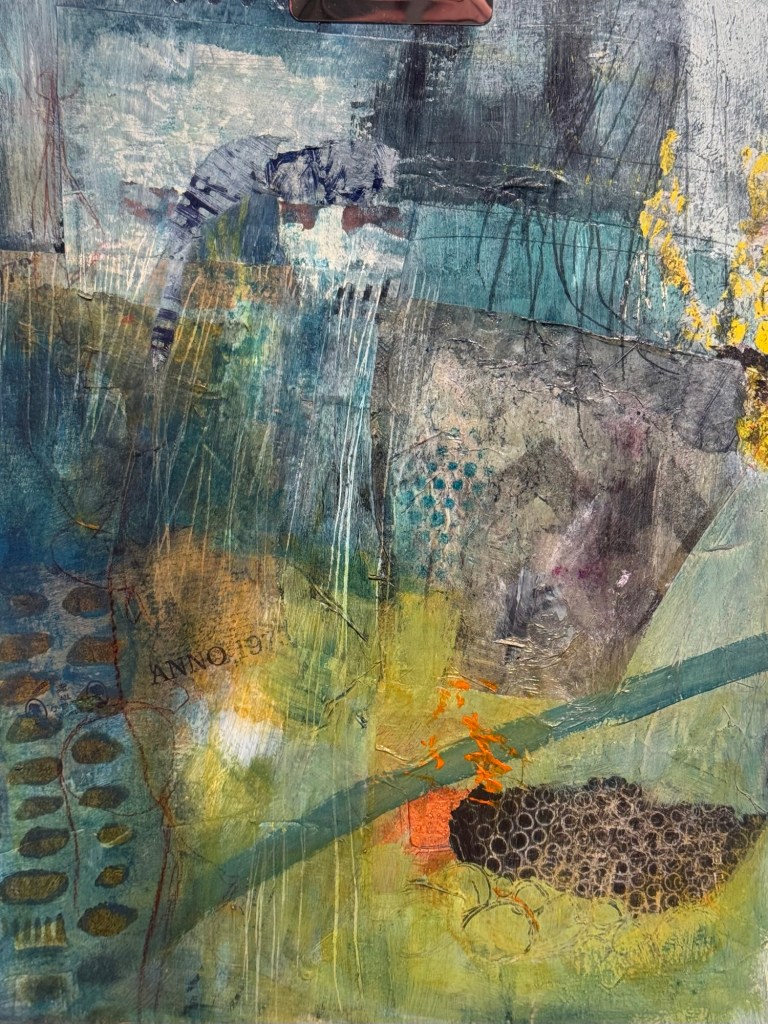
The Pathway to Maws
Linked and separate, these two industrial sites were once connected by a railway line which is now a gentle nature walk.
Acrylic Paint, oil pastels and various collaged surfaces on a wooden panel. £50
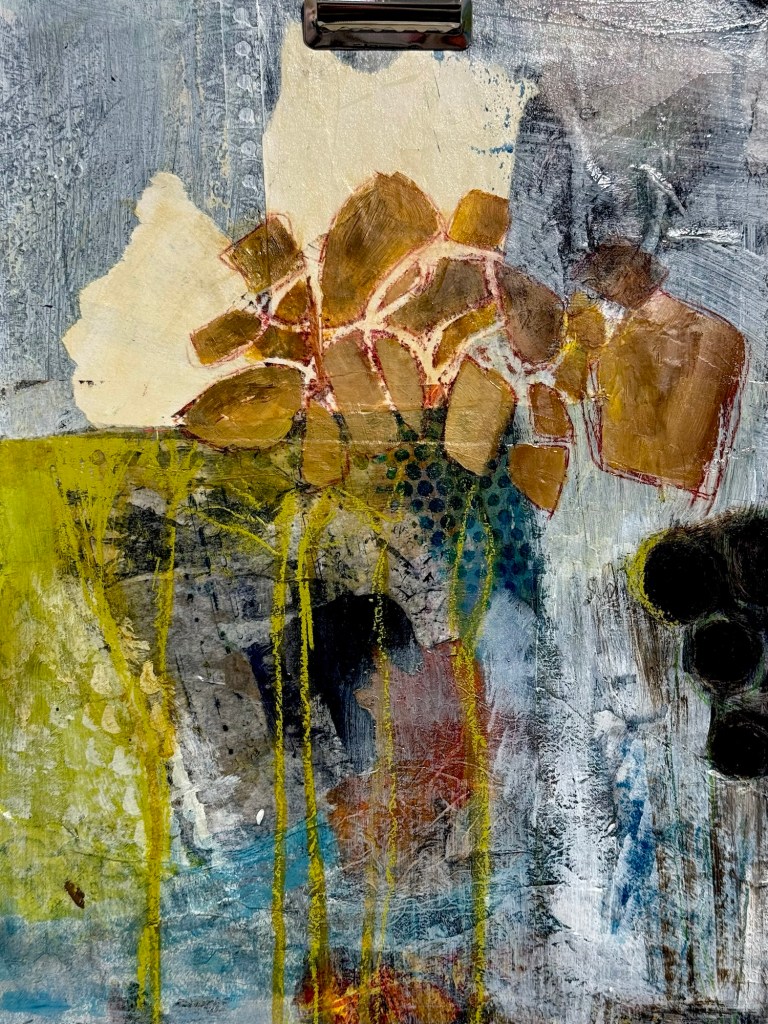
The Trees Grew Back
It’s hard to ever image this place without the abundance of nature.
Acrylic Paint, oil pastels and various collaged surfaces on a wooden panel. £50
The Same Sun Shines Down.
The earth and the sky are the same, the people and the place are different.
Acrylic Paint, oil pastels and various collaged surfaces on cartridge paper, framed. £50
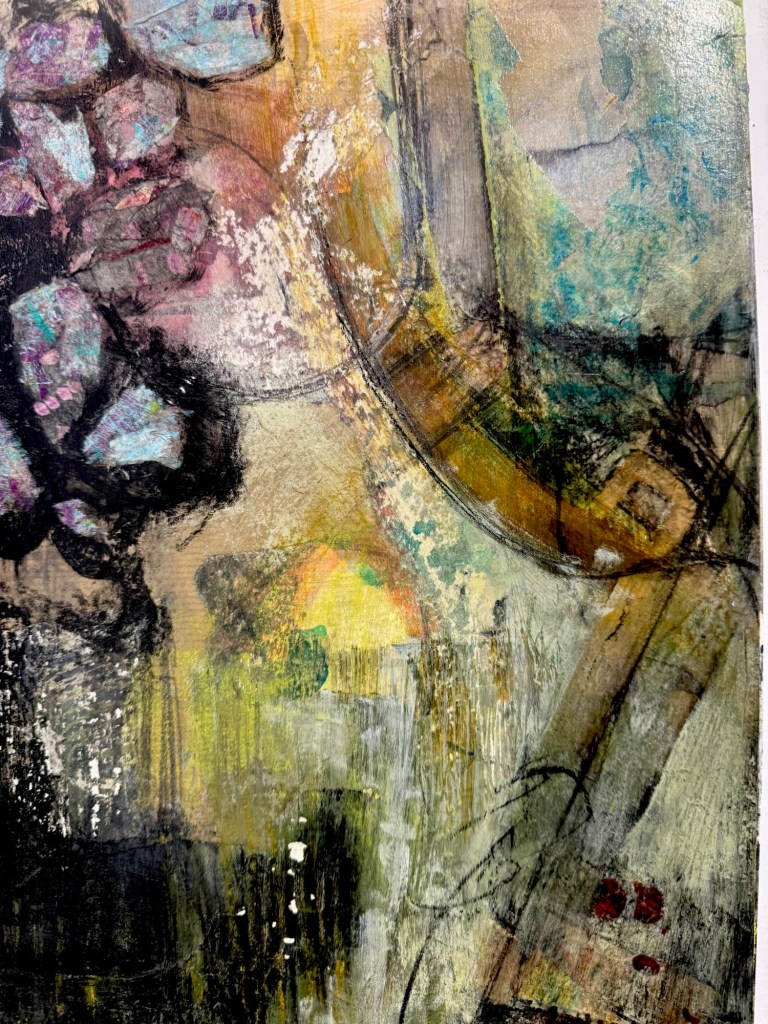
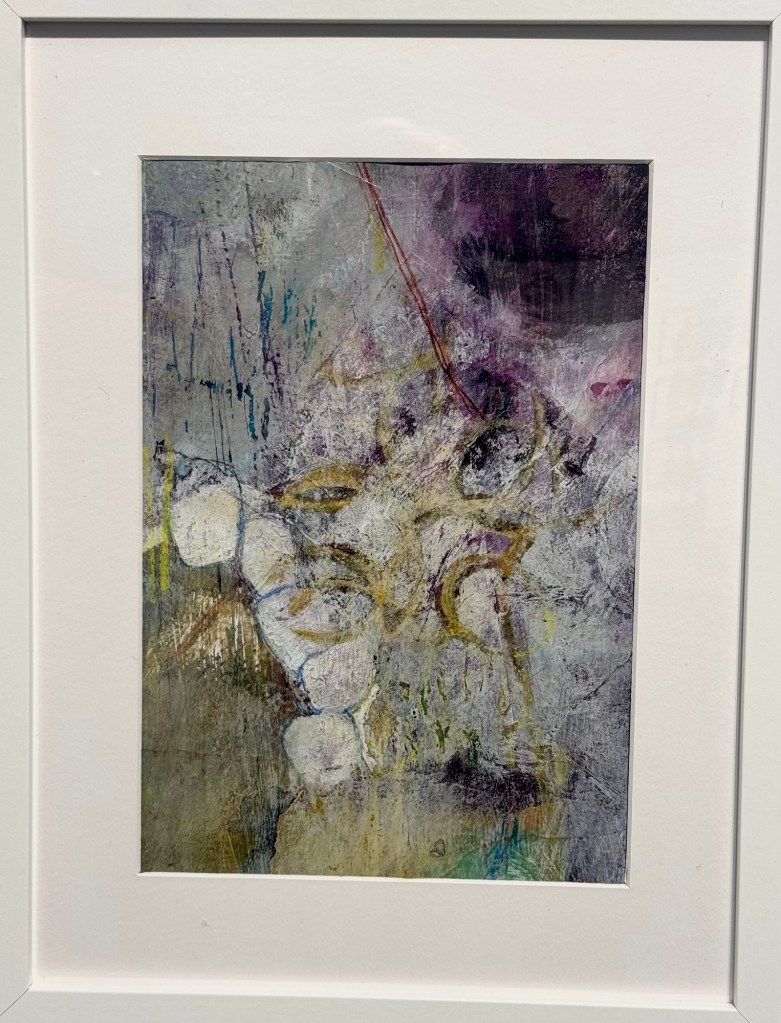
The Clouds of Time
In autumn and sometimes in spring this valley is again shrouded in cloud but now it is the mist rising from the river.
Acrylic Paint, oil pastels and various collaged surfaces on cartridge paper, framed. £50
I would like to conclude by saying a huge thank you to Jan Park and Rod Hill of Footprint Gallery for this wonderful opportunity and to my fellow artists who were generous, kind and excellent company.

 Sally Harrison Artist
Leave a comment